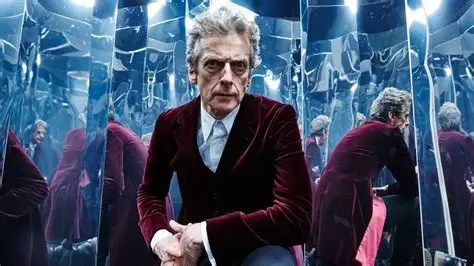
Recently I have been watching through the British TV Show Doctor Who with my younger sister. I have been an avid fan of this show since I was 12, and as she had never seen it before, I decided to watch it through with her and have her experience the same joy the show has brought me over the years. We’ve successfully watched from the 9th doctor (Christopher Eccleston) all the way to almost all of Peter Capaldi’s run, (we are currently about to start season 10 which is his final season.)
As I said, I have been an avid fan for nearly 10 years of my life now and as such, like most fans of the show, I have developed a “favorite doctor”. If you are unfamiliar with the show’s premise, basically he is a time travelling humanoid alien who flies through space and time in his police box TARDIS that is bigger on the inside with companions. His alien nature allows him to regenerate or change his form in order to cheat death which causes his physical appearance to change, along with his personality and his likes and dislikes. The core of the person as well as all his memories stay, but in some ways, he becomes a completely new person.
This has given each actor or actress to portray The Doctor the ability to do their own take on The Doctor’s personality in each regeneration. Some are better than others and as the years have gone on, my opinion on which incarnation is truly the best has fluctuated. But now with this soon to be my 5th complete watch through of the resurrected series, I believe I have finally pinpointed my absolute favorite reincarnation and what I believe could be the objectively best incarnation of The Doctor ever to be put to screen.
Before we dig into the meat and potatoes of the why, I do need to specify that a lot of this is mainly just my opinions on the matter and as such, can and should be disagreed with. Furthermore, this does not mean that Peter Capaldi is the best actor, and the others did not live up to the job, but it is more a combination of Capaldi’s outstanding portrayal mixed with the story beats and the character’s arc that made his run the best. So, with that all out of the way, let’s dive into why Peter Capaldi is not just a doctor, but The Doctor. The definite article, you might say.
DISCLAIMER: SPOILERS FOR DOCTOR WHO AHEAD!!!!!
Section 1: The Actor Behind the Man
Peter Capaldi’s exceptional acting career needs no explanation. He rose to prominence in the early 2000s via the show “The Thick of it” and soon after took on the iconic role of The Doctor from previous renowned actor Matt Smith. This was a tough act to follow as Smith had created a young, quirky and fun-loving Doctor who never ceased to become extremely serious when the moment called for it. He is also responsible for delivering one of the greatest Doctor monologues in the history of the show; that being the I am the Doctor speech in the episode “The Rings of Akhatan.”
Needless to say, when the unusually quick blast of regeneration energy dissipated and an older scary white-haired Scotsman stood where Smith did a second before, people were shocked to say the least. So far in the new run of Doctor Who, The Doctor had been more or less a “heart throb”. The previous three incarnations had been younger attractive suave men. (Excluding the War Doctor and less so for the slightly older Christopher Eccleston.) This itself was a change in direction but mostly because each doctor had been in some capacity romantically involved with at least one companion. 9/10 with Rose and 11 loosely with Clara. To make matters worse, Clara was present during this regeneration. This means that either she is about to become involved with much older man, or the romantic story thread was going to be dissolved. This became the case especially with the line from Capaldi stating: “Clara, I’m not your boyfriend” to which she responds: “I never thought you were” to which he states: “I never said it was your mistake.” This confirms that Smith’s incarnation was in fact developing romantic feelings for her and this new incarnation did not share the same sentiment.
Many believed this would lead to a darker heartless incarnation where The Doctor would be quicker to kill and slower to save. His first season even explored these themes with him constantly asking the question of “Am I a good man?” His new personality caused him to worry about if what he was doing was truly good or if he was becoming the things he sought to destroy. Eventually he came to the conclusion that he is not either a good or bad man, but rather “an idiot, with a box and a screwdriver, just passing through, helping out, learning.” While his outward shell became grumpier and less adept at talking to people, the true heart of the man never changed.
Capaldi’s ability to portray the inner turmoil The Doctor was feeling during this season and more so the inner emotions he goes through in the next season (which I will address later) shows just how in tuned with the character Capaldi was. It comes as no surprise, after all he has been a fan of the show since he was a child and would routinely write letters to the BBC regarding a Doctor Who Fan Club. He had an in-depth knowledge and love for the show for almost his entire life, and this gave him the ability to understand the true character of The Doctor like no one else.
Furthermore, his ability to simultaneously command the room and act like the “fun/cool uncle” who completely misunderstands what the kids are talking about nowadays, shows the range and depth of his acting which also shows the range of the character. But, the strongest tool Capaldi has in his arsenal is his nonverbal acting. He can be sitting on the steps of the console room looking down at the ground, and his mannerisms and eyes tell you everything he is thinking about. When he is cross, the eyebrows tell a thousand stories, and when he is truly sad, we see it in the hesitant tears that seem afraid to fall from his eyes. Capaldi’s doctor may not be overly emotional, but when he is, it is raw, visceral and real. The crescendo of these acting chops is shown in two notable instances; the first being in the greatest doctor who monologue: “I Forgive You” in the episode “The Zygon Inversion”, and his last moments with Clara, before she is killed in the episode “Face the Raven”.
I think it cannot be questioned that Capaldi was a fantastic choice for The Doctor, but he would not have much to go off without the subject of the next section of this review:
Section 2: The Story and Arc of the Good Man
When David Tennant left the show after the fantastic but emotionally controversial story arc of the Time Lord Victorious, then showrunner Russel T. Davies, also said adieu to the TARDIS, (though both of these two would return 13 years later.) Steven Moffatt was the next to step through the blue doors of the TARDIS and lead the show in a whole new direction, taking it international and with a whole new cast to boot. Doctor Who had already been growing in popularity in America before this, but the new era and increased availability surged it into widely known and loved around the world.
Moffatt had already worked as a writer on the show giving us incredibly iconic episodes like “The Empty Child”, “Blink”, and “Silence in the Library/Forest of the Dead”. Then with him at the reigns, he proceeded to continue not only writing absolutely fantastic episodes like “The Eleventh’ Hour”, “The Time of Angels/Flesh and Stone”, “A Christmas Carol”, ‘A Good Man Goes to War”, The 50th Anniversary Special “The Day of the Doctor” and Smith’s finale episode “The Time of the Doctor” to name a few, but also oversee massive season long overarching plotlines and story beats that brought a whole new view to the world of Doctor Who.
His style of writing lent itself more to a sequential TV series style with the plot thread progressing through the season continuously as opposed to being referenced in passing amidst a myriad of standalone episodes. This was favorable as most of the audience now had access to entire seasons of the show via streaming services and could watch them back-to-back and in the correct order.
After Smith left, and Capaldi took the role, this style of writing did not change. Season 8 covers the overarching plot of both The Doctor debating inside himself of whether or not he is a good man, as well as a tease during almost every episode of people ending up in some sort of afterlife after they die. This obviously plays into the finale where it is revealed what the afterlife truly is, but it is teased and built upon through the whole season. Then in season 9, the plotline follows both The Doctor thinking he is nearing his death, as well as the looming threat of the mysterious hybrid. It all culminates in The Doctor losing Clara and then fighting his way back to Gallifrey to confront the Time Lords, making them bring Clara back and thus becoming the Hybrid himself.
It’s all a big plot line that we do not need to discuss here but ultimately, it is extremely well done and makes the show feel more like a flesh out story, as opposed to just something big happening to wrap the season up.
Let’s talk about season 9 while we are at it because it holds what many view (myself included) as the greatest Doctor Who episode and perhaps even one of the greatest TV episodes of all time. It all starts with Clara’s death. Clara has unknowingly sacrificed her life to save a friend, and this leads to her being locked into a certain death. This breaks The Doctor as he has no way to save her and as he watches her last minutes count down, he is fueled with rage. Rage against the situation, rage against himself, but mostly, rage against those that put them in this situation; The lady Me and whoever she struck a deal with to capture him. Although Me is distraught about this turn of events, The Doctor does not take this apology and even quotes the line “The Doctor is no longer here, you are stuck with me! And I will end you, and everything you love.” Clara uses her last moments to comfort him and charge him to not fall into grief and not stay alone, but after she dies, he is transported into a prison designed to torture him into revealing secrets he holds, via a lumbering figure straight out of his nightmares that never stops following him.
The episode that follows is none other than “Heaven Sent”. This masterpiece of an episode follows a grief-stricken Doctor locked in two prisons; the physical one he has been teleported into, but also the inner one of his grief. We see him grasp with the challenge of losing Clara as well as finding a way to escape. Eventually he realizes it is a loop he is stuck in, and the only way out is by punching through a wall made of a material 4 times stronger than diamond. He resolves to this fate and spends the next 4.5 billion years dying and being reborn without memory of what he just did, leaving him to rediscover his fate over and over again.
He does this all despite the fact that he can leave anytime he wants. All he had to do was reveal the true nature of the Hybrid. He goes the long way around however, because this gets him an audience with his captors and shows that he is not playing around. The episode reaches its climax with a montage of The Doctor spending billions of years repeating his actions throughout the episode over and over again, with every run getting a fraction of an inch closer to freedom all while reciting the story of the Shepherd’s Boy, all scored over by a fantastic musical piece called “The Shepherd’s Boy”. When he finally escapes, he stands outside the citadel of Gallifrey and reveals himself to be the Hybrid.
The following episode shows his true dark side as he takes down the entire regime of Gallifrey, particularly the Lord President Rassilon, without even saying a word. And then he uses his new authority to get Clara back, but she’s not fully alive and it all ends with The Doctor having to forget Clara in order to heal time. It’s all a big climactic finale and really well done, but the main reason I bring all that up is because of Capaldi’s performance in these scenes.
It is no surprise that in the 50th anniversary when we get the tease of who the next Doctor will be, it is of his eyes. Capaldi’s eyes tell a million stories with a single look. He portrays anger, sadness, grief, authority, pain and determination in a single look. The look he gives the Time Lords. He doesn’t have to monologue or show off his cleverness or try to fool them into surrendering. They know who he is and what he is capable of. He just has to stand there and look at them.
I’ve caught myself ranting again and I could go on and on for hours about every time he is in the scene, Capaldi’s Doctor has commanded the screen without a single word, but I think this is enough for now. I plan on eventually breaking down his most famous ‘I Forgive You” monologue and perhaps going into further depth on “Heaven Sent”, but for now I think this is enough. Either way, I’ll see you all again sometime, but until then you can find me in the study.


Leave a comment